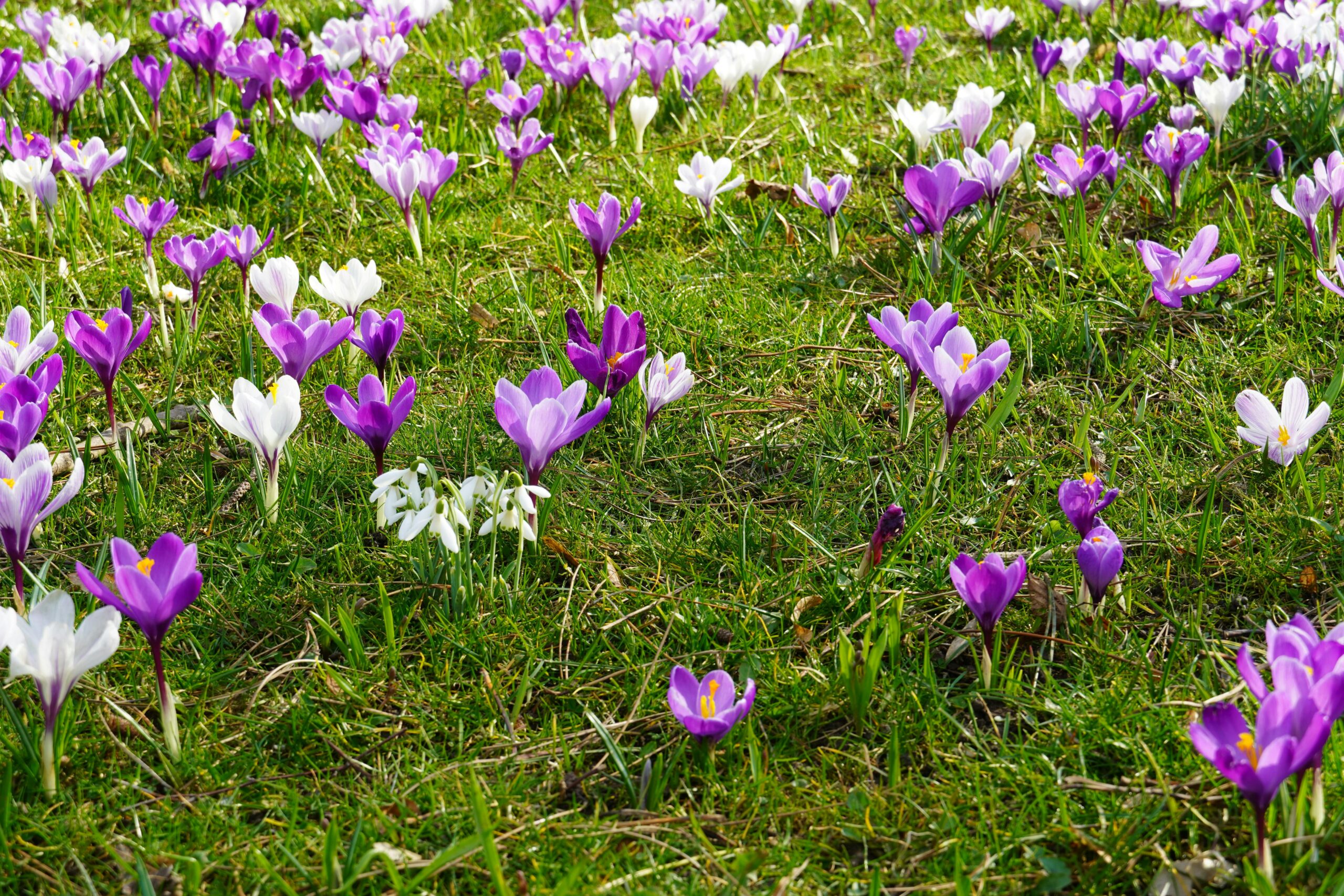
Want to reduce the amount of time you spend mowing your lawn, provide nectar for pollinators, and reduce your carbon footprint? Change your lawn into a ‘flawn!
Reduce or eliminate your lawn.
Turf grass lawns have been a tradition in the United States for many years. Anyone with a yard or property wants a perfectly manicured green carpet. As we know now, grass can act as a Dead Zone, devoid of any nutrition or habitat, for native birds and insects. All of these practices, including mowing, watering and fertilizing turf and applying pesticides, have a negative impact on the environment. More people are looking for alternatives to their current practices and want to increase biodiversity on their property.
American lawns have little value to pollinators.
As a garden designer, I am often asked by clients who want to remove their lawns what they should plant instead. The goal is usually to reduce maintenance and become more environmentally friendly. I tell them that any plants they choose to replace a lawn with will require greater care. All perennials and plants need care, whether it’s pruning, cutting back, weeding, or mulching. The biggest problem is weeding. It’s not necessary to weed a lawn, but it is important to keep the planting beds free of weeds. The cost of mulching can also add up. This is a trade-off that most people find surprising.
The flowering creeping thyme is interspersed with turf grass
It is possible to turn their lawn into a flower or ‘flawn,’ which many people describe as a ‘weedy lawn’. It is important to encourage other pollinator-friendly plants to grow in your lawn. You should also stop using fertilizer and other lawn treatments. This solution gives you the appearance of a lush green lawn, but with flowering plants mixed in.
A full-fledged, lush meadow may be the best solution. However, installing and maintaining a meadow can take more work than you think. To see the entire process, visit my Meadow 101 post – How to Install and Maintain a Beautiful Meadow.
Meadows are beautiful and alive.
Why do you need a bee lawn?
- The lawns of bees are a mixture of flowers and turf grasses.
- A bee lawn is a living mosaic that contains about half grass, half wildflowers.
- Bee lawns are eco-friendly because they do not use pesticides or fertilizers
- Bee lawns are still able to be used as a lawn, even if there is a lot of foot traffic.
- A bee lawn attracts over 60 native species of bees, including many endangered bees.
You will end up with a textured turf, which has more colour, fragrance and movement. American Meadows, Flawn, and other companies have developed lawn seed mixes that I highly recommend.
You can also add seeds and plants from the University of Minnesota to your lawn. The majority of mixes contain Dutch White Clover ( Trifolium repens), Self-heal ( Prunella vulgaris) and Creeping Thyme ( Thymus serpyllum), among others, that can be incorporated into your lawn grasses.
A bee lawn will require fewer resources to maintain because it doesn’t need to be fertilized or watered. Mowing is still necessary, but it’s much less frequent. It’s not as valuable as an entire landscape of native shrubs and perennials, but it can still be a useful tool in creating a complete habitat for bees. Why not make your lawn more bee-friendly?
American Meadows Alternative Lawn Wildflower Seed Mix contains 13 varieties of plants, which include: six annual wildflowers, including Poppy, Sweet Alyssum and Creeping Thyme, that will provide colour in the second year; five perennial wildflowers, including Daisies, Creeping Thyme and Perennial Clover, which sends deep roots to the ground and conditions the soil. It also suppresses the weeds and feeds honeybees and bumblebees. Wildflowers range in height from 3” to 20”.
Add 3 Top Flowers to Your Lawn
White Clover, which is not native to the area, is often considered a weed by lawn purists. Fixes its Nitrogen. It can actually add nitrogen to the soil, which fertilizes it. Clover is resistant to browning from urine. It also suppresses other weeds. This is what sold me.
Self-Heal or Prunella is a native that grows in full sun or partial shade. It has a long flowering period, lasting from June to August. The purple flower adds a lot of colour to your lawn. Prunella has been used medicinally since ancient times. It is a member of the mint family, and it can spread like mint.
Creeping thyme is a non-native plant with small, pink flowers. It provides nectar to pollinators.
Other To Try
Some of these plants are already present on your lawn and can be easily introduced.
Roman Chamomile Anthemis nobilis is commonly seen in English lawns, but it is also quite happy in the U.S. It is a ferny plant with daisy flowers. I first grew it in my herb gardens, but it quickly migrated to my lawn. It can reach a height of 20”.
Common Violets are native plants that host some fritillary butterflies. My violets always have bees buzzing about them. They’re fine on my lawn, but I want them out of my flower beds.
The dandelions are another option for a bee-lawn. Dandelions are non-native but bloom all year, even during the winter months when pollinator food is scarce or non-existent.
Creeping Charles (Glechoma Hederacea)can prove to be a difficult weed to eliminate. Why bother? Early blooming flowers are a favourite of bees.
Baby Blue Eyes (Nemophilia Menziesii) is a tiny blue flower that appears in early spring. This is an annual that will grow when planted in the winter or spring and reseeds for next year.
Select Low-Growing Flowers
You need to choose your wildflower varieties carefully, as not all will tolerate being mowed down and stepped upon. They should be low-growing, flowering at very low levels, and tolerant of foot traffic. They must also be attractive to the bees and compete for space with other turfgrasses. You may already have a lawn that attracts bees! Avoid using weed-killing products if you currently have flowering weeds in your yard.
White clover is resistant to pet urine.
How to Plant
You can buy mixes at garden centres or online, or create your own by purchasing seeds for each species separately and mixing them. Flawn has specific mixes to overseed your lawn, which is a more convenient and cheaper way to do it.
As with a regular lawn, seeding is best done in early spring or late fall. Rake out the clippings and cut the lawn to the shortest length possible. Use a rake to loosen up the soil and then spread the seed. Water the soil frequently over the next two weeks to ensure that the seeds germinate and grow. The video above will give you easy-to-follow instructions.
Flawn’s instructions for overseeding in winter, with snow on the ground, intrigued me! Watch this video.
The results will depend on the conditions of the plant, such as the amount of sunlight, the soil, the moisture, etc. If you want to get more flowers, mow at a higher level and less frequently. The most important thing is to avoid mowing when flowers are in bloom.



Leave a Reply